Cell Service, Food and Practical Realities at the Grand Canyon
Where your phone works at the Grand Canyon, where to eat at each rim, water and fuel realities, and what to download before you lose the signal.
 By Daniel Begay, Southwest canyon-country tour guide & Navajo cultural specialist
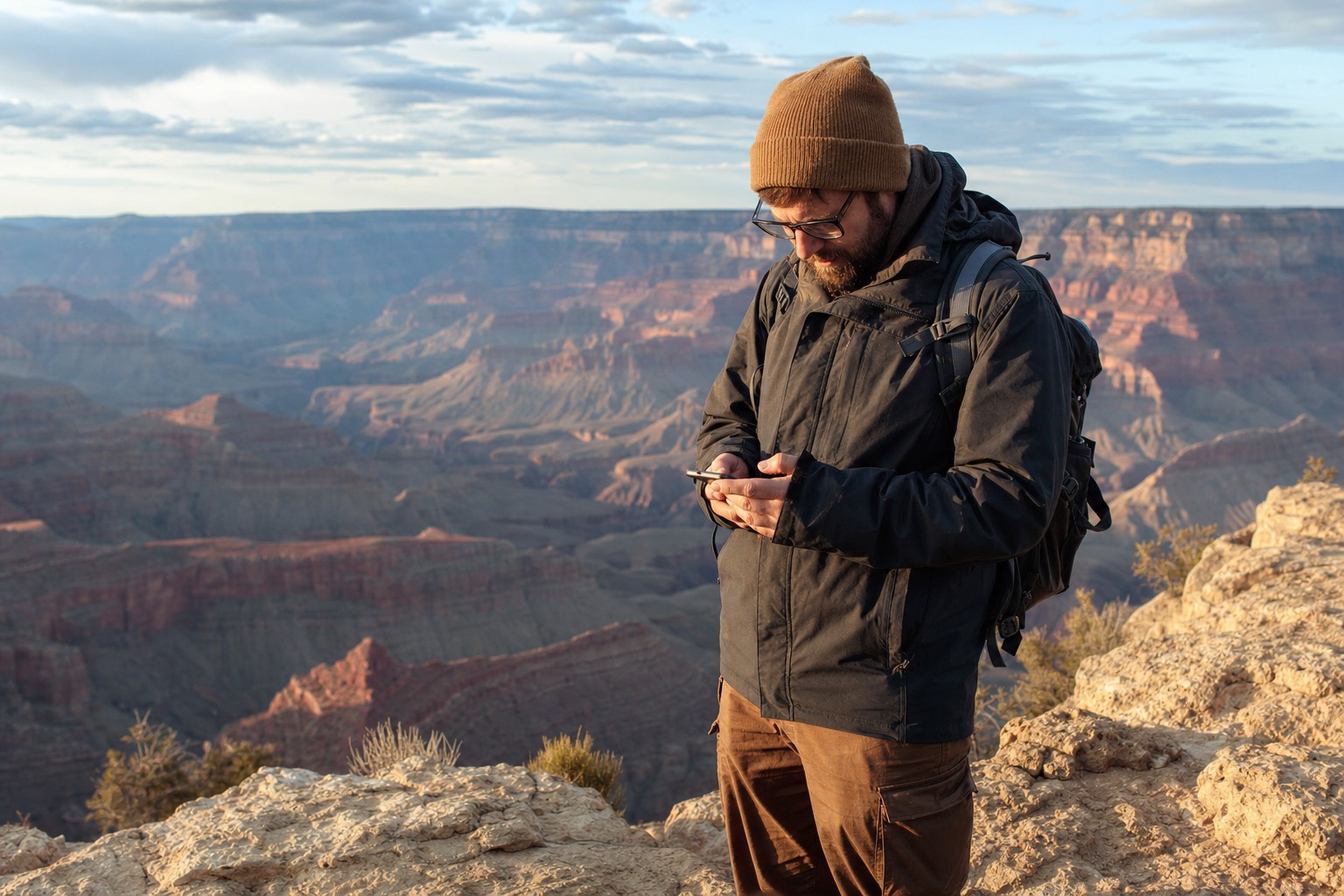
There is a stretch of road east of the South Rim village where I watch my phone bars drain like a battery. One bar, a flicker of roaming, then nothing but juniper and sky. I have driven canyon-country roads my whole working life, and the pattern never changes: the signal lives where the buildings are and dies where the views begin. That single fact explains most of the practical trouble visitors hit at the Grand Canyon, so this post handles it straight: phones, food, water, and fuel, rim by rim.
Is there cell service at the Grand Canyon?
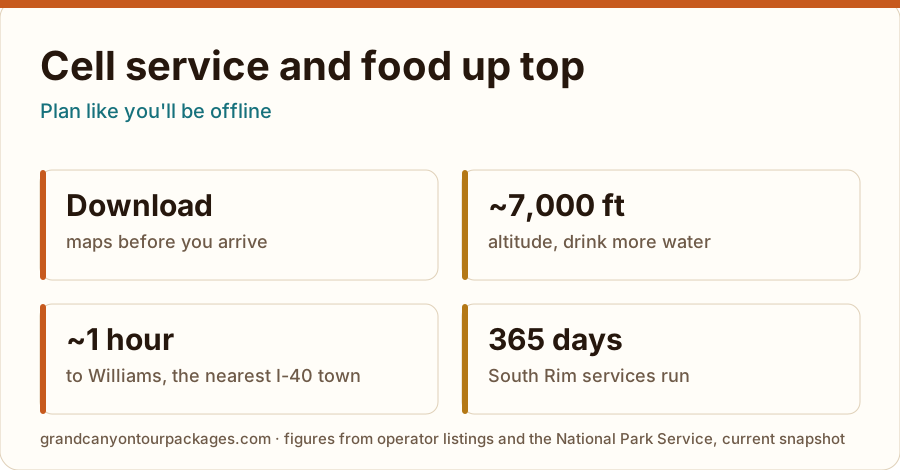
In the South Rim village area, yes, usable service is the norm. It degrades fast once you move along the rim drives, and below the rim you should expect nothing at all. The fix is boring and reliable: download offline maps and anything else you need before you arrive, then treat any signal as a bonus.
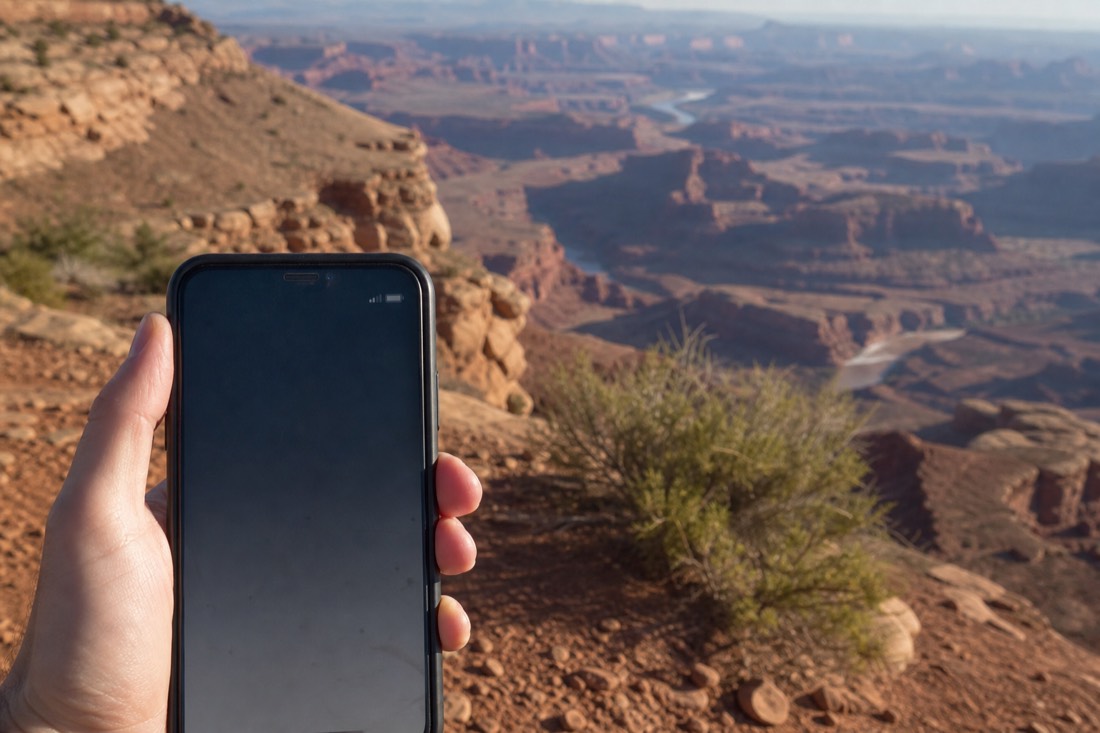
The geography does the explaining. Towers cluster around the village, and canyon walls are extremely good at blocking whatever those towers send. So the pattern you can plan around looks like this: reasonable service where you park and eat, thinning coverage as you drive the viewpoint roads, and a dead phone in your pocket the moment a trail drops below the rim, a remoteness the Grand Canyon overview makes obvious at a glance from any map. None of this needs to cost you anything. Maps, tickets, confirmations and playlists all download in your hotel the night before. The people I see frustrated at overlooks are almost always trying to pull something live that they could have carried in with them.
| Download before you go | Why |
|---|---|
| Offline maps of the park and gateway towns | Rim drives and trails have little to no signal |
| Tour confirmations and tickets, saved as screenshots | No live lookup needed at checkpoints or meeting points |
| Trail map or park newspaper PDF | Rangers cannot be everywhere; the paper never buffers |
| Music, podcasts, audiobooks | Long approach drives with empty airwaves |
| Flashlight app tested, battery pack charged | Sunset viewpoints empty out in the dark |
Where can you actually eat at the South Rim?
The South Rim village has real food year-round, and more range than people expect: grab-and-go market food, casual cafeterias, coffee counters, and sit-down dining up to the historic El Tovar dining room. You will not go hungry inside the park. You just will not find a late-night strip of restaurants either.
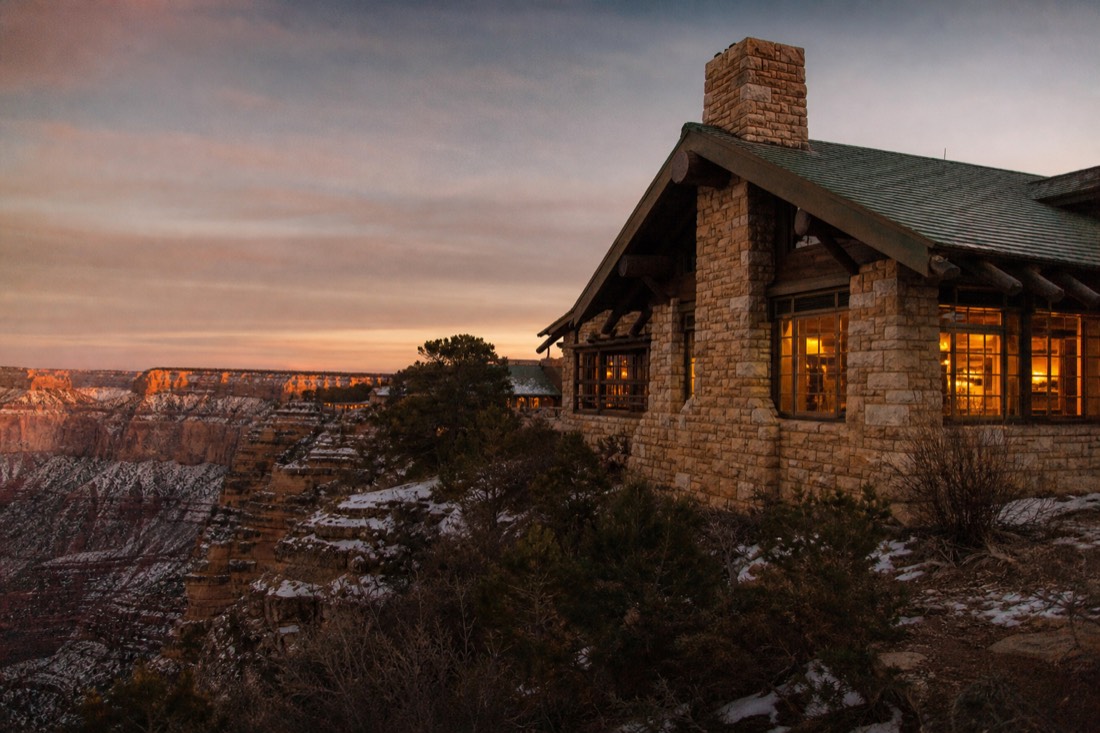
Think in categories rather than menus, because operators and hours shift with the seasons. At the quick end, the village market sells sandwiches, fruit and trail food you can carry to a viewpoint. In the middle sit the cafeteria-style and casual options that feed families fast after a long rim walk. At the top, the El Tovar dining room has been serving canyon visitors for over a century, the kind of room where the building itself is half the meal. My advice is rhythm, not restaurants: eat a real breakfast, carry lunch to the rim, and land your sit-down meal in the evening when the light show outside is done. If you are staying outside the park, Tusayan, Williams and Flagstaff each add their own food scene, which is half the argument in the where-to-stay guide.
What are food and services like at Grand Canyon West?
Thinner than the South Rim, by design. Grand Canyon West has limited on-site dining, and the Hualapai-run destination is a remote outpost, not a village. Most Vegas visitors solve this on the tour itself: the big coach day, rated 4.6 across 6,144 GetYourGuide reviews, includes lunch with a dining voucher option.
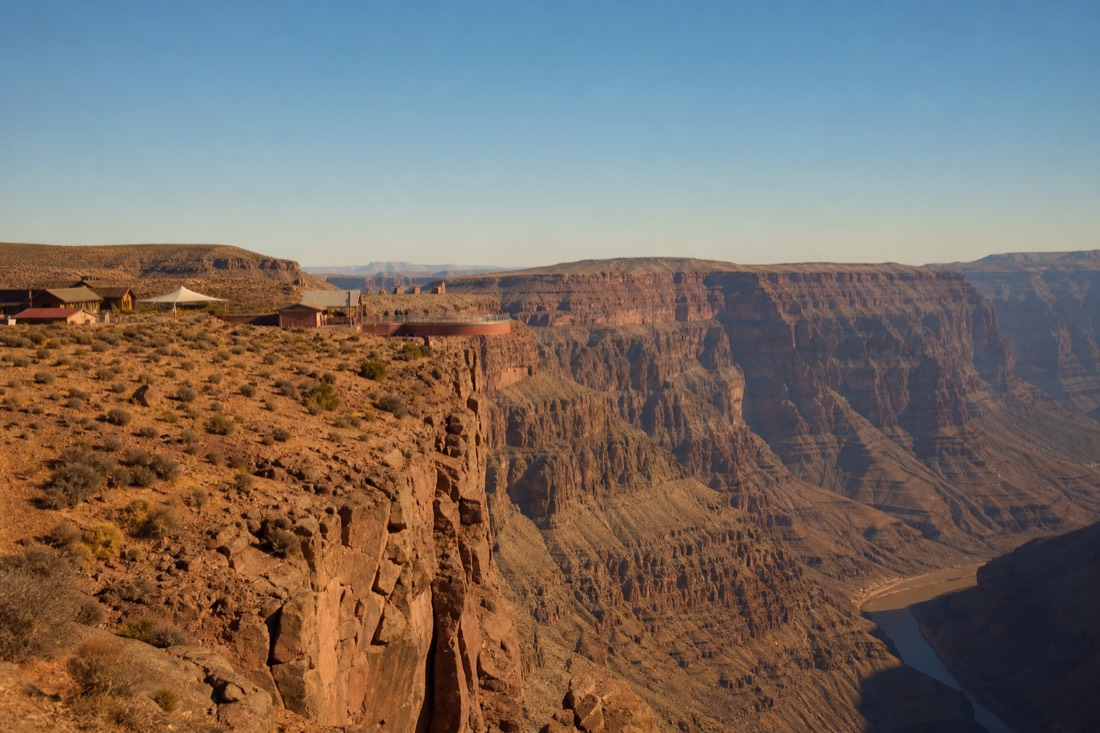
The West Rim rewards arriving prepared. It sits two hours of empty desert from Las Vegas, on sovereign Hualapai land with its own admission and its own rules, laid out on the official Grand Canyon West FAQ. Out there, "limited dining" means you eat what the destination serves when it serves it, so the coach tours that bundle a meal earn their keep. The one I point Vegas visitors to handles the whole day: Hoover Dam stop, West Rim time, lunch available with the relevant voucher option, Skywalk as an add-on. See how it fits alongside the other Las Vegas Grand Canyon tours, or check live availability and prices on GetYourGuide. One more practical note while you are packing: the Skywalk now allows personal phones on the bridge at your own risk, a change I covered in the Skywalk photo rules post.
| Service | South Rim | Grand Canyon West |
|---|---|---|
| Food range | Grab-and-go up to historic sit-down dining | Limited on-site dining; tour meal bundles common |
| Water refill | Free refill stations in the developed area | Carry your own; buy before the drive |
| Cell signal | Usable in the village, fades on rim drives | Expect little; download everything in Vegas |
| Fuel | Fill up in Tusayan or Williams beforehand | Fill up before leaving the Vegas area |
| Open | Year-round, 24 hours | Year-round, tribal schedule |
Where do you get water, and where do you fuel up?
Water is the easy one: the South Rim's developed area has free refill stations, so bring bottles and use them. Fuel needs planning, not luck. Fill the tank in Tusayan or Williams before you enter the park, and before any long desert leg, because canyon country punishes an optimistic fuel gauge.
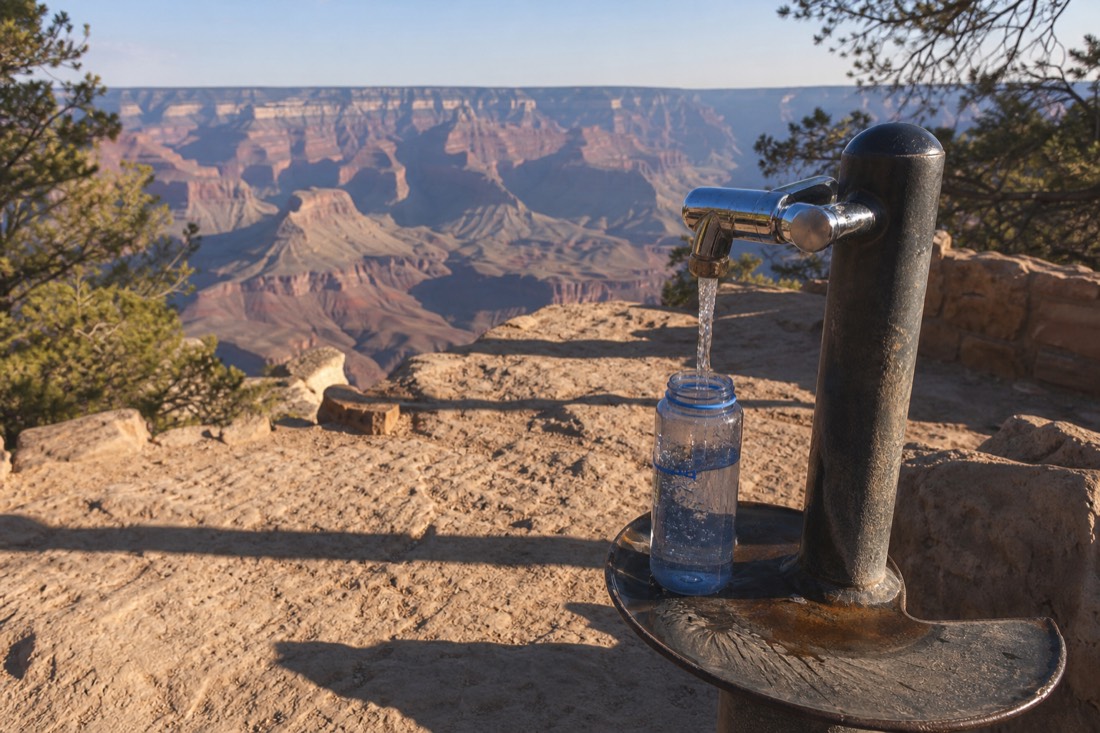
Desert rules are simple and non-negotiable. Carry more water than feels reasonable, refill whenever the chance appears, and never pass a gas station on a low tank out here, because the next one can be an hour of empty road away. The refill stations are one of the South Rim's quiet gifts; entry to the park itself is $35 per vehicle per the NPS fee page, and the water after that is free. Summer raises the stakes: heat below the rim is dangerous even on short walks, so drink before you feel thirsty and keep a gallon jug in the car as your reserve. I have handed my spare bottle to enough underprepared hikers over the years to say this plainly: nobody has ever regretted carrying too much water at the Grand Canyon.
Should you eat before or after your tour?
Match the meal to the tour clock. Sunrise and morning tours mean eating light beforehand and having a real meal after. Full-day Vegas trips build lunch in. Sunset tours flip it: substantial late lunch first, dinner after dark. The canyon punishes both empty stomachs and heavy ones at the wrong moment.
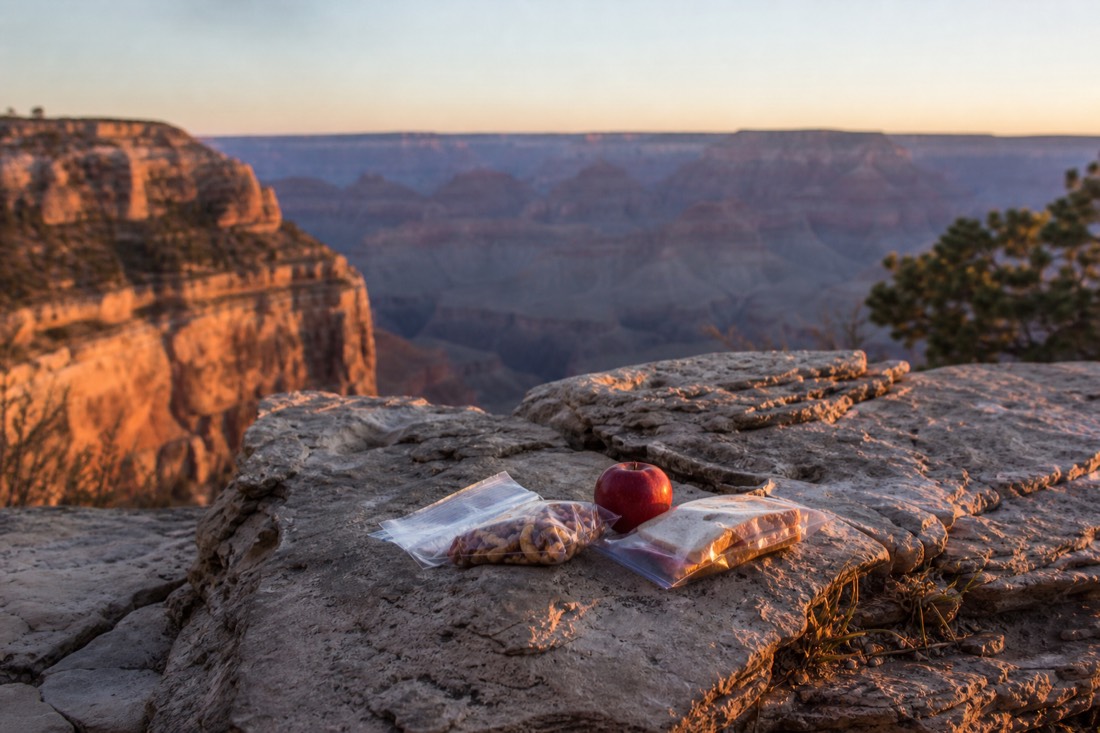
This sounds fussy until a 4 a.m. hotel departure meets an empty coffee counter. Tour days at the canyon run long, distances between food stops are real, and winging it works far worse here than in a city. Here is the pattern I give people, tour type by tour type; pair it with the one-day itinerary if you are building the schedule yourself.
| Tour type | Before | During | After |
|---|---|---|---|
| Sunrise or early morning rim tour | Light: coffee, something from the hotel | Carry snacks and water | Full breakfast or brunch back in the village |
| Full-day Vegas coach (West Rim) | Real breakfast in Vegas | Included lunch / dining voucher option | Dinner back on the Strip |
| Helicopter flight | Light meal, never empty, never stuffed | Nothing needed; flights run short | Normal meal after landing |
| Sunset or evening tour | Substantial late lunch | Water and a warm layer | Late dinner; kitchens near the park close early |
| Railway day from Williams | Breakfast in Williams before boarding | Snacks on board; lunch at the rim layover | Dinner in Williams after the return |
Make the day fit your trip
Check your date before arranging the rest
Initial editorial suggestion. Use the optional choices to narrow this article’s shortlist; confirm individual eligibility with the operator.
South Rim sunset safari
An off-road forest approach and South Rim viewpoints, finishing at Grandview Point at sunset.
Meet at 408 AZ-64 in Tusayan; English guide and water included. No hotel pickup. Nonresident park charges and tips extra. Bumpy vehicle; not recommended during pregnancy or for spinal or cardiovascular conditions. Minimum booking: two guests.
Compare options and tailor this choice
Why choose an alternative?
South Rim sunset safari · Tusayan · 3 hours to allow
An off-road forest approach and South Rim viewpoints, finishing at Grandview Point at sunset. Meet at 408 AZ-64 in Tusayan; English guide and water included. No hotel pickup. Nonresident park charges and tips extra. Bumpy vehicle; not recommended during pregnancy or for spinal or cardiovascular conditions. Minimum booking: two guests.
Grand Canyon Railway round trip · Williams · 8 hours to allow
Historic rail travel from Williams to Grand Canyon Village with a same-day return. About eight hours overall; own arrival at Williams Depot. Choose coach or first class. Meals and hotel pickup excluded. Under-twos ride on a lap. Arrange any boarding assistance in advance; confirm current park charges.
Las Vegas West Rim coach tour · Las Vegas · 11 hours to allow
Hotel transport, an IHOP breakfast and canyon time without driving the desert return yourself. Selected Las Vegas hotel pickup; English guide, breakfast and water included. Skywalk and lunch depend on the option. Plan around 11 hours; confirm mobility arrangements with the operator.
Compare your own quotes
Enter totals for the same party and inclusions, in one currency. Include transport, entry, meals and extras in both quotes.
Viator scheduled departures
Select a date to see the published schedule. Seats, final price and booking are confirmed on Viator.
Affiliate booking link: we may earn a commission at no extra cost to you.